
There is no chemical, spray, bleach solution, or household cleaner that can permanently eliminate every mold spore from a home, as explained in the hidden dangers of mold. The most effective long-term solution is to remove active mold and eliminate the moisture source that allowed it to grow.
Mold spores naturally exist indoors and outdoors. According to the U.S. Environmental Protection Agency, completely eliminating all mold spores from an indoor environment is not practical. What homeowners can control is whether those spores have enough moisture to begin growing.
That makes moisture control the most important part of permanent mold prevention.
If mold develops because of a plumbing leak, roof leak, wet basement, condensation, high humidity, or water intrusion, cleaning the visible surface without solving that problem may only provide temporary results.
A lasting mold-control plan normally involves:
- Finding and repairing leaks
- Removing existing mold growth
- Drying damp materials completely
- Removing porous materials that cannot be restored
- Improving ventilation where necessary
- Controlling indoor humidity
- Addressing condensation and drainage problems
- Monitoring previously affected areas for returning moisture
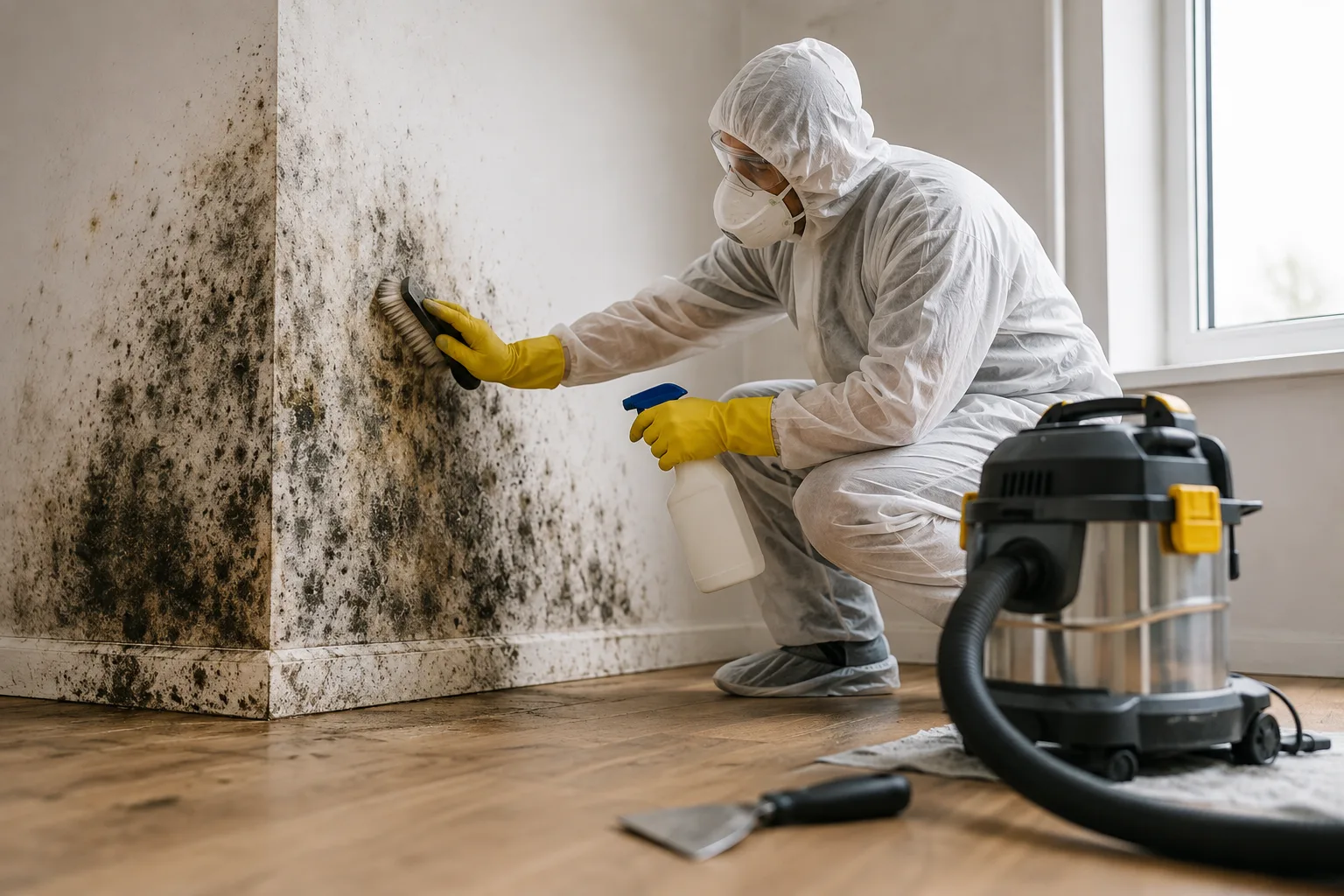
For small areas on hard surfaces, EPA guidance recommends scrubbing the mold with detergent and water and then drying the area completely. Moldy absorbent materials such as carpeting or ceiling tiles sometimes need to be discarded because mold can grow deep inside porous materials.
Simply killing mold is also not enough. Even dead mold can continue to trigger allergic reactions in sensitive people, which is one reason contaminated material needs to be properly cleaned or removed.
The closest thing to permanently solving a mold problem is therefore not finding a stronger chemical. It is creating an environment where mold no longer has the moisture it needs to keep growing.
Can You Ever Really Get Rid of Mold in Your House?
Yes, you can get rid of an active mold problem in your house, but you cannot realistically remove every mold spore from the indoor environment.
This distinction matters.
Mold spores constantly enter homes through doors, windows, ventilation systems, clothing, shoes, and other pathways. Their presence does not automatically mean a house has a mold problem, but you can learn more in the Mold & Moisture Medics blog.
A problem begins when those spores land on a surface with enough moisture to support growth.
The EPA explains that some mold spores will always remain in indoor air and household dust. If moisture is controlled, however, those spores generally cannot develop into active mold growth.
A successful remediation should therefore leave the home with:
- No active visible mold growth in the treated area
- No unresolved moisture source
- No continuing water damage
- No moldy odor associated with the affected area
- Properly dried building materials
- Removed or restored contaminated materials
The EPA considers remediation complete only after the water or moisture problem has been corrected and visible mold and moldy odors are no longer present. The area should also remain free of new mold or water damage when checked afterward.
So yes, a mold problem can be successfully remediated. A completely sterile house with zero mold spores, however, is neither realistic nor necessary.
What Are the First Signs of Mold Sickness?
People often search for “mold sickness,” but there is no single set of symptoms that proves mold is causing an illness.
Some people exposed to damp or moldy environments experience no symptoms at all, while others may develop respiratory, eye, skin, or allergy-related symptoms.
According to the CDC, common symptoms associated with mold exposure can include:
- Stuffy or runny nose
- Sore throat
- Coughing
- Wheezing
- Red or irritated eyes
- Burning eyes
- Skin irritation or rash
People with asthma or allergies to mold may experience stronger reactions. Those with weakened immune systems or certain chronic lung diseases can also face greater risks from fungal infections.
Early symptoms can sometimes resemble seasonal allergies, a cold, respiratory irritation, or reactions to other indoor pollutants. That means symptoms alone cannot tell you whether mold is responsible.
The property itself may provide additional clues.
A combination of physical symptoms with a persistent musty smell, visible mold, repeated water leaks, damp drywall, high humidity, previous flooding, or recurring condensation may justify investigating the home for a moisture problem.
Anyone experiencing persistent or significant health symptoms should seek guidance from an appropriate healthcare professional rather than trying to diagnose mold exposure from symptoms alone.
How Much Does Professional Mold Removal Cost?
Professional mold remediation in the U.S. currently costs around $2,368 on average, with many projects ranging from approximately $1,223 to $3,757.
Current 2026 cost data from Angi shows that prices vary significantly depending on the mold’s location, the size of the affected area, accessibility, testing requirements, and the amount of damaged material that needs to be removed or restored.
Typical estimated ranges by location include:
- Basement: $500–$3,000
- Crawl space: $500–$2,000
- Attic: $1,000–$4,000
- HVAC system: $3,000–$10,000
- Walls: $1,000–$20,000
These are planning ranges rather than guaranteed prices.
A small patch on an accessible surface may require relatively limited work. Mold hidden behind drywall after a long-term plumbing leak could require containment, demolition, drying, disposal, structural cleaning, and reconstruction.
That is why two houses with similar-looking mold stains can receive dramatically different estimates.
When comparing remediation proposals, ask what the quoted price includes. Important items may include containment, removal, HEPA filtration, disposal, drying, moisture-source repairs, inspection, and reconstruction.
What Plant Removes 78% of Airborne Mold?
English ivy (Hedera helix) is the plant associated with the widely repeated claim that it removes approximately 78% of airborne mold.
However, that figure needs context before using it as home-remediation advice.
The number originated from a 2005 experiment presented at the American College of Allergy, Asthma and Immunology annual meeting. Researchers placed English ivy into controlled containers containing airborne particles from moldy bread.
After 12 hours, the reported airborne mold level had fallen by approximately 78.5%.
That does not mean English ivy will remove 78.5% of mold from a normal house.
The experiment involved a controlled enclosure, while a real home contains constantly changing airflow, ventilation, furniture, doors, HVAC systems, changing humidity levels, and potentially active mold colonies inside building materials.
A plant also cannot:
- Repair a leaking pipe
- Stop water entering a basement
- Remove mold from drywall
- Dry wet insulation
- Remediate a contaminated crawl space
English ivy should therefore not be treated as an alternative to mold remediation.
If mold is actively growing inside a house, EPA guidance remains focused on removing the mold and correcting the moisture problem that supports its growth.
How Do Professionals Remove Mold?
Professional mold remediation generally involves identifying the moisture problem, containing the affected area, removing contaminated material, cleaning salvageable surfaces, filtering airborne particles, drying the structure, and repairing damaged areas.
The exact process varies depending on the size and location of the problem.
A typical remediation may include the following stages.
1. Identify the moisture source
Before remediation can succeed, the contractor needs to determine why the area became wet.
Common causes include plumbing leaks, roof damage, foundation moisture, flooding, condensation, and high indoor humidity.
2. Determine the extent of contamination
Visible mold may not represent the entire problem. Moisture can travel behind walls, below floors, above ceilings, and through insulation.
3. Contain the affected area
For larger projects, professionals may isolate contaminated areas from unaffected parts of the property to reduce the spread of mold particles and contaminated dust during removal.
4. Filter airborne particles
Professional remediation projects commonly use HEPA vacuums and air-filtration equipment during cleanup.
5. Remove materials that cannot be restored
Porous materials such as drywall, insulation, carpeting, ceiling tiles, or other absorbent materials may need to be removed when they are heavily contaminated.
EPA guidance notes that mold can enter the spaces and crevices of porous materials, making complete cleaning difficult or impossible in some situations.
6. Clean salvageable surfaces
Hard surfaces can often be cleaned rather than removed.
7. Dry the structure
Drying is essential because leaving moisture behind creates conditions for mold to return.
The EPA recommends drying wet or water-damaged areas and materials within approximately 24 to 48 hours when possible to help prevent mold growth.
8. Restore damaged materials
After remediation and drying, removed drywall, insulation, flooring, paint, or other materials may need to be replaced.
Professional remediation is therefore more than applying a mold-killing chemical. The objective is to remove contamination and correct the conditions that caused it.
What Are Signs of Hidden Mold?
A persistent musty smell without visible mold is one of the strongest warning signs that mold may be hidden somewhere in a building.
Hidden mold can develop where moisture accumulates out of sight.
According to the EPA, common locations include:
- Behind drywall
- Behind wallpaper or paneling
- Above ceiling tiles
- Beneath carpets and carpet padding
- Inside walls around leaking or condensing pipes
- Behind furniture where condensation occurs
- Inside ductwork
- In roof materials above ceilings
Other warning signs can include:
Recurring water stains
Brown, yellow, or dark marks on walls or ceilings may indicate a leak or previous water intrusion.
Peeling or bubbling paint
Paint may begin separating when moisture is trapped behind the surface.
Warped drywall or baseboards
Long-term moisture can change the shape or texture of building materials.
Persistent dampness
A wall, floor, crawl space, or basement that remains unusually damp deserves investigation.
Previous flooding or plumbing leaks
Even when the visible water has disappeared, moisture may remain inside walls or other enclosed areas.
Mold that keeps returning
Repeated surface cleaning followed by mold returning in the same location often suggests the underlying moisture source remains unresolved.
Hidden mold should be approached carefully. The EPA warns that disturbing concealed mold, such as removing contaminated wallpaper, can release large quantities of spores. An experienced professional may be appropriate when hidden contamination is suspected.
Is Vinegar or Bleach Better for Killing Mold?
Neither vinegar nor bleach should be viewed as the universal solution for mold remediation.
For routine residential cleanup, the EPA recommends scrubbing mold from hard surfaces with detergent and water and drying the surface completely rather than routinely relying on a biocide such as chlorine bleach.
Bleach can kill microorganisms under appropriate conditions, but killing mold is only part of the job.
Dead mold can still cause allergic reactions in some people, so the contaminated material must also be removed or properly cleaned.
Vinegar contains acetic acid and does have antifungal properties against some organisms. However, research shows that its effectiveness varies by fungal species. One laboratory study using household-strength vinegar found that it inhibited Penicillium chrysogenum but did not inhibit the growth of Aspergillus fumigatus under the study conditions.
So asking whether vinegar or bleach is “better” can distract from the more important question:
What material is contaminated, how extensive is the mold, and why is the area wet?
For a small area of mold on an appropriate hard surface, follow EPA cleanup guidance or the directions of an appropriate registered cleaning product.
For porous materials or extensive mold growth, household cleaners may not solve the problem.
Never mix bleach with ammonia or other household cleaning products. Mixing cleaning chemicals can create dangerous toxic vapors.
Is Mold Remediation Worth It?
Mold remediation is often worth the expense when mold is widespread, hidden, recurring, associated with significant water damage, or affecting materials that cannot be safely cleaned in place.
Not every mold problem requires a professional remediation company.
The EPA states that homeowners can often handle mold covering less than approximately 10 square feet, or roughly a 3-foot-by-3-foot area, provided the situation does not involve extensive water damage or other complications.
Professional remediation becomes more valuable when:
- Mold covers a large area
- Several rooms are affected
- Mold is hidden behind walls
- The source of moisture is unclear
- The property experienced substantial flooding
- Mold keeps returning after cleaning
- HVAC components are affected
- Extensive drywall or insulation needs removal
- The problem involves difficult-to-access areas
The biggest benefit is not simply having someone “kill” the mold.
A properly scoped remediation project should address the entire chain of the problem:
water source → moisture → mold growth → contaminated material → drying → prevention
That distinction matters because paying someone to clean a visible stain while leaving a hidden leak unresolved is unlikely to provide lasting value.
A successful remediation should leave the moisture problem corrected, visible mold removed, moldy odors eliminated, and the treated area free of recurring water damage or growth when checked afterward.
For homeowners dealing with widespread or recurring mold, professional remediation can therefore be less about cosmetic cleaning and more about stopping a building problem before it causes additional damage.