
Yes, you can remediate a small mold problem yourself in some situations. The U.S. Environmental Protection Agency says that if the affected area is less than about 10 square feet, roughly a 3-foot-by-3-foot section, homeowners can often handle cleanup themselves. Larger infestations, extensive water damage, contaminated water, or hidden mold usually require professional help.
Finding mold in your home can be unsettling, especially when you do not know how far it has spread, so learning about the hidden dangers of mold can help you act. A small patch around a window or bathroom wall may be manageable, but mold caused by ongoing leaks, flooding, high humidity, or moisture trapped inside walls can become a much bigger problem.
The most important part of mold remediation is not simply removing what you can see. You also need to identify and correct the moisture source that allowed mold to grow in the first place.
For a small area, homeowners may be able to clean mold from hard surfaces using detergent and water and then dry the surface completely. Appropriate gloves, eye protection, ventilation, and respiratory protection can also reduce exposure during cleanup.
Professional mold remediation should be considered when the affected area is large, mold keeps returning, there has been significant water damage, contaminated water is involved, or mold appears to be growing inside walls, ceilings, HVAC systems, crawl spaces, or other difficult-to-access areas.
What Are the 10 Warning Signs of Mold Toxicity?
People searching for “mold toxicity” are often describing symptoms they believe may be connected with mold exposure. Mold exposure does not affect everyone in the same way, and symptoms alone cannot prove that mold is the cause.
According to the CDC, exposure to damp or moldy environments may cause no symptoms in some people while causing respiratory or allergic reactions in others.
Ten symptoms that may occur with mold exposure include:
Stuffy or congested nose
Runny nose or frequent sneezing
Sore or irritated throat
Persistent coughing
Wheezing
Red, itchy, or irritated eyes
Skin irritation or rash
Worsening asthma symptoms
Shortness of breath
Fever in certain higher-exposure situations
People with asthma or mold allergies may experience stronger reactions. Individuals with weakened immune systems or chronic lung conditions may also face a greater risk of fungal lung infections.
These symptoms can also have many causes unrelated to mold. Anyone experiencing persistent, worsening, or serious respiratory symptoms should discuss them with a qualified healthcare professional rather than trying to diagnose mold-related illness based only on symptoms.
At the same time, if symptoms appear alongside visible mold, musty odors, previous flooding, leaking plumbing, or persistent moisture in the home, the building should be inspected for a moisture and mold problem, see the Mold & Moisture Medics blog archives.
Do You Have to Throw Everything Away With Mold in the House After?
No, you usually do not have to throw everything away after finding mold in your home.
Whether something can be cleaned or needs to be discarded depends largely on the material, the amount of mold growth, how long it remained wet, and whether mold has penetrated deeply into it.
Hard, nonporous surfaces can often be cleaned with detergent and water and then dried thoroughly. Porous materials are more difficult because mold can grow inside tiny spaces that cannot easily be reached during cleaning.
The EPA notes that moldy materials such as carpeting and ceiling tiles may sometimes need to be discarded because removing mold completely from porous materials can be difficult or impossible.
Items that may require replacement after serious mold contamination can include drywall, insulation, carpet padding, ceiling tiles, heavily contaminated upholstered furniture, and other absorbent materials.
That does not automatically mean every porous belonging must be thrown away. Valuable furniture, artwork, documents, rugs, clothing, or sentimental belongings may sometimes be restored by professionals who specialize in cleaning or conservation. The EPA recommends consulting an appropriate specialist when an item is expensive or has sentimental value.
The extent of contamination should determine the decision, rather than assuming everything inside a mold-affected house is ruined.
Is It Safe to Live in a House After Mold Remediation?
A house can generally be occupied after mold remediation when the moisture problem has been corrected, mold-contaminated materials have been properly removed or cleaned, the affected areas are dry, and there are no remaining signs of active mold growth or moldy odors.
The EPA provides several indicators for determining whether remediation has been completed successfully. The original water or moisture problem should be fixed, visible mold and mold-damaged materials should no longer be present, moldy odors should be gone, and the area should show no new signs of water damage or mold when it is checked again.
Occupants should also be able to return to the space without experiencing health complaints related to the remediated environment.
One of the biggest mistakes after remediation is assuming that removing visible mold solves everything.
If a leaking pipe, roof problem, drainage issue, condensation problem, or excessive humidity remains, mold can return even after a thorough cleanup.
A successful remediation therefore addresses both sides of the problem: the mold growth and the moisture source supporting it.
Is It Okay to Breathe in a Little Mold?
Mold spores naturally exist both outdoors and indoors, so completely avoiding every mold spore is unrealistic. However, visible mold growth or persistent indoor mold should not simply be ignored.
The health impact of mold exposure varies considerably from person to person. Some people may experience no noticeable effects, while others may develop nasal congestion, coughing, wheezing, eye irritation, skin irritation, or other allergic symptoms. People with asthma, mold allergies, weakened immune systems, or chronic lung diseases may be more vulnerable.
The goal inside a home is therefore not to create a completely mold-free environment. That is practically impossible.
Instead, homeowners should prevent indoor mold colonies from developing by controlling moisture and promptly addressing visible mold growth.
If you can see or smell mold indoors, the CDC recommends removing the mold and correcting the moisture problem rather than focusing on identifying the particular species.
Can a House With Mold Be Saved?
Yes, many homes with mold can be successfully restored.
Finding mold does not automatically mean the house is permanently damaged or needs to be abandoned. Mold remediation professionals regularly remove contaminated materials, dry affected areas, correct moisture problems, and replace damaged building materials.
The final outcome depends on how extensive the mold growth is and how much damage moisture has caused.
A localized problem caused by a plumbing leak may require removal of damaged drywall and insulation followed by repairs. More extensive problems involving prolonged flooding, structural wood deterioration, crawl spaces, wall cavities, or HVAC systems may require a much larger remediation project.
Acting early matters because mold can damage the materials it grows on, and prolonged moisture exposure can increase the amount of building material that eventually needs to be replaced.
Even when mold contamination is extensive, portions of the property that remain structurally sound can often be cleaned or restored while damaged materials are replaced.
The key is determining the full extent of both the mold and the underlying moisture damage before repairs begin.
How Do You Know if Mold Is Behind Drywall?
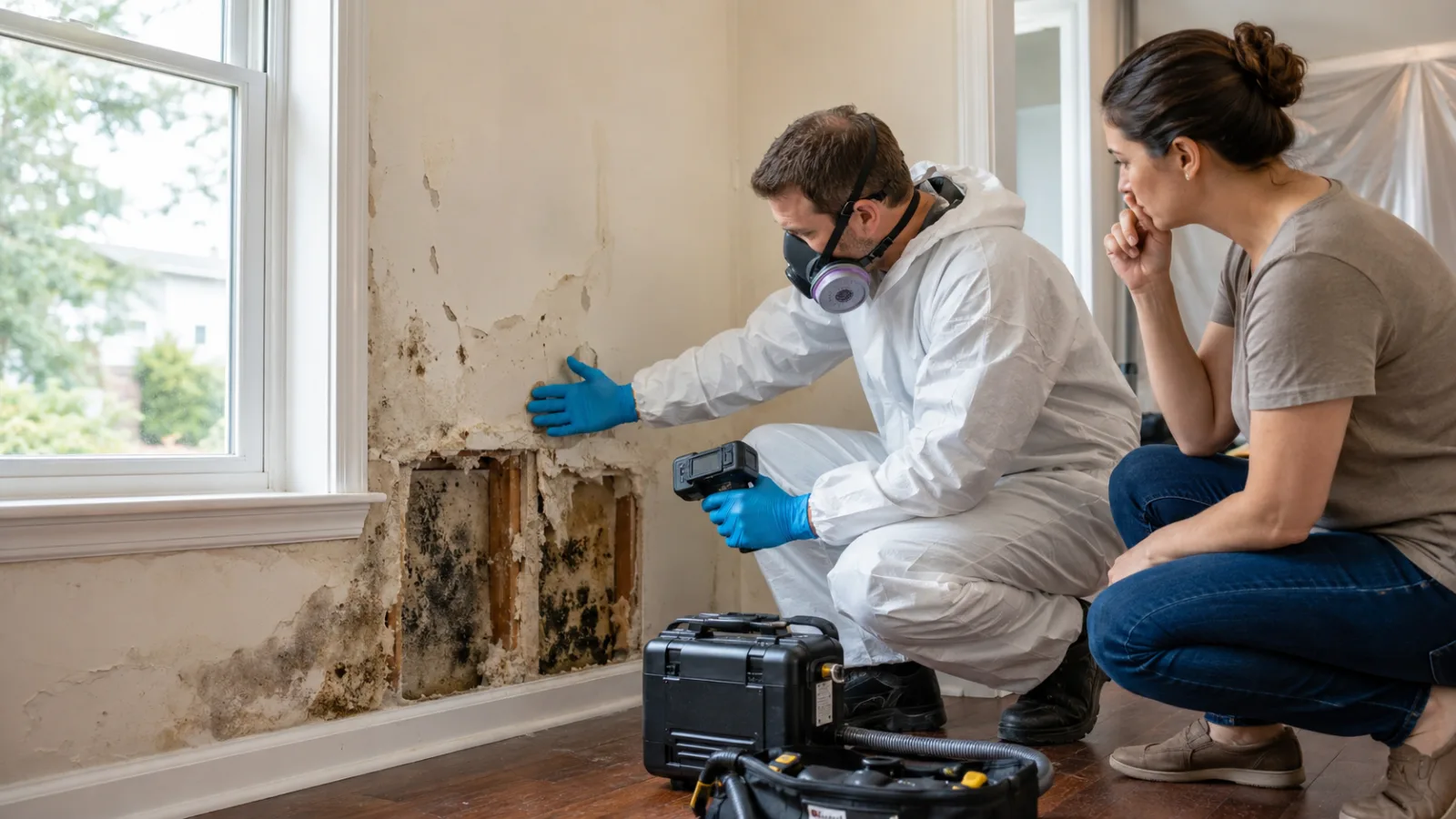
Common warning signs of possible mold behind drywall include a persistent musty smell, previous leaks or flooding, water stains, peeling paint, bubbling surfaces, damaged drywall tape, discoloration, or moisture that continues appearing without an obvious source.
The EPA specifically identifies rippling wall coverings, cracked drywall tape, peeling paint, and other evidence of water damage as signs that should be investigated because moisture may have entered the wall cavity.
Hidden mold is particularly common around leaking or condensing pipes, behind drywall and wallpaper, behind furniture where condensation develops, above ceiling tiles, beneath flooring, and in other enclosed areas that stay damp.
A musty odor with no visible source is another important clue.
However, cutting open a wall simply to check for mold is not always a good DIY strategy. Disturbing hidden mold can release spores and contaminated dust into other areas of the home.
The EPA advises caution when investigating suspected hidden mold and suggests considering an experienced professional when mold may be concealed inside building materials.
How to Permanently Get Rid of Mold in a House?
You cannot permanently remove every mold spore from a house because mold spores naturally exist in indoor and outdoor air. What you can do is prevent those spores from developing into active mold growth.
The EPA describes moisture control as the key to controlling indoor mold.
A long-term mold prevention strategy should focus on fixing leaks, stopping water intrusion, drying wet materials quickly, improving ventilation, managing condensation, and keeping indoor humidity under control.
Water-damaged materials should ideally be dried within 24 to 48 hours because prolonged moisture makes mold growth more likely.
That means repeatedly spraying or painting over a moldy surface without correcting the moisture problem is unlikely to solve the issue.
If mold keeps coming back in exactly the same place, investigate what is happening behind or around that area.
Possible causes include leaking pipes, roof leaks, foundation moisture, poor drainage, bathroom condensation, inadequate ventilation, HVAC condensation, damp crawl spaces, and water entering through exterior walls.
Removing the source of moisture is what turns mold cleanup from a temporary cosmetic fix into a long-term solution.
What Plant Removes 78% of Airborne Mold?
English ivy, or Hedera helix, is the plant commonly associated with the claim that it can remove approximately 78% of airborne mold.
That number needs important context.
The widely reported figure came from a small controlled experiment presented at an allergy and immunology meeting in 2005. In a sealed test environment, researchers reported that English ivy reduced airborne mold particles by approximately 78.5% over 12 hours.
This does not mean putting an English ivy plant in a bathroom, basement, or living room will remove 78% of the mold from a real home.
The original experiment took place in a controlled container rather than a normal occupied building with ventilation, doors, windows, changing humidity, furniture, and continuous movement of air.
More importantly, a plant cannot correct the moisture problem that causes active mold growth.
If water is leaking behind a wall or humidity remains high enough for mold to grow, adding houseplants is not a replacement for repairing the moisture source and removing contaminated materials.
English ivy may be an attractive indoor plant, but it should be viewed as a houseplant rather than a mold remediation system.
For actual mold prevention, moisture management, ventilation, drying, repairs, and appropriate remediation remain the important steps.
When Should You Call a Mold Remediation Professional?
DIY mold cleanup can make sense for a small, clearly defined problem when the moisture source has already been identified and corrected.
Professional inspection or remediation becomes more appropriate when mold covers a larger area, keeps returning, follows substantial flooding or water damage, appears inside walls or HVAC components, or cannot be traced to a clear moisture source.
The EPA generally uses about 10 square feet as the point at which homeowners should consider additional remediation guidance rather than treating the problem as a routine small DIY cleanup.
A professional assessment can also help determine whether visible mold represents the entire problem or is simply the part of a larger moisture issue that has become visible.
Ultimately, successful mold remediation is not about making a surface look clean. It is about finding the source of moisture, removing contaminated materials appropriately, drying the building, and creating conditions where mold cannot continue growing.
Final Takeaway
Small mold problems can sometimes be handled at home, but mold should never be treated as only a surface stain.
If you find mold, first ask why that area became wet.
Fixing the leak, condensation, humidity, drainage issue, or other source of moisture is just as important as cleaning the visible mold.
When contamination is extensive, hidden, recurring, or connected with substantial water damage, professional mold inspection and remediation can help determine the full extent of the problem before additional damage occurs.